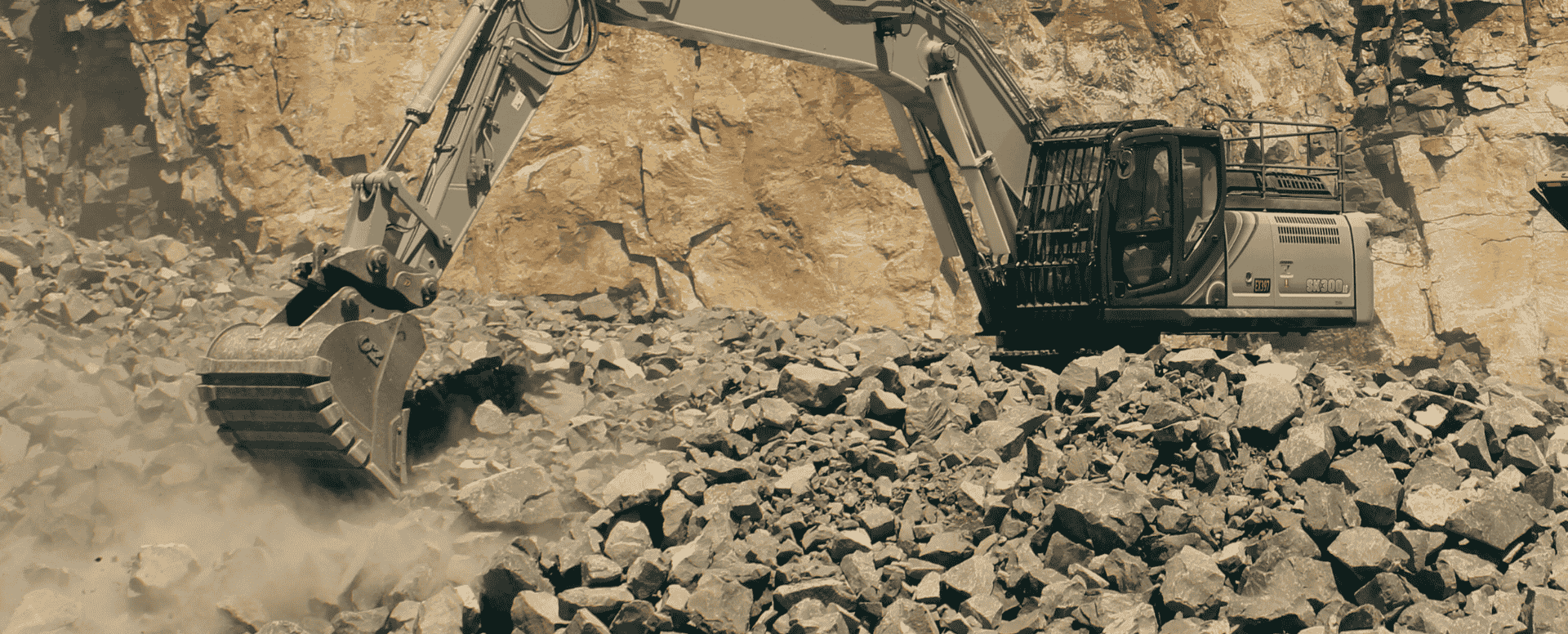
Whether you like to call it an excavator, digger, or just some serious muscle, an excavator is the undisputed backbone of most commercial, civil, and agricultural job sites. When it comes to raw digging power, precision trenching, and heavy lifting, few pieces of earthmoving machinery can compete. But exactly what is an excavator, and how does it turn hydraulic pressure into a massive breakout force? For contractors, plant managers, and farmers, understanding the mechanics, functions, and different types of excavators is the key to maximising productivity and choosing the right setup for the dirt you’re moving.
Exploring the Parts of an Excavator
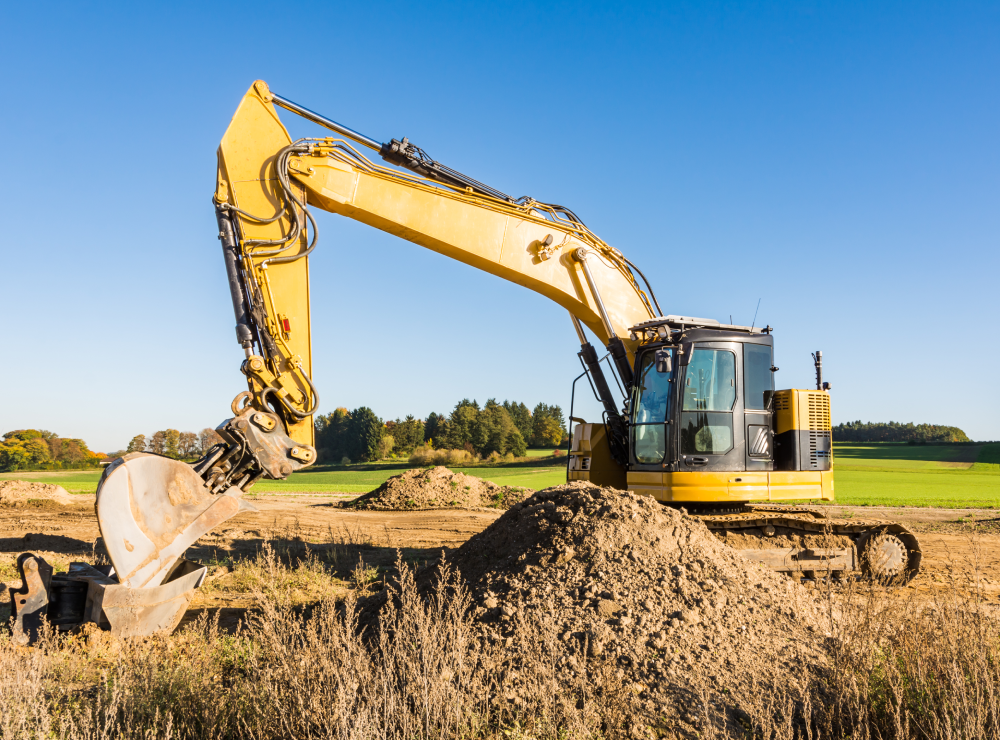
To understand how these machines handle heavy-duty tasks, you have to look at how they are built. An excavator is divided into two main sections: the undercarriage (the base) and the house (the cabin and engine assembly). The house sits on a rotating platform that allows a full 360-degree cab rotation, meaning an operator can dig, swing, and dump material in any direction without moving the tracks.
The typical parts of an excavator are:
- The Boom: The large upper arm section attached directly to the house.
- The Arm: The extension section that connects the boom to the bucket.
- The Bucket: The heavy-duty steel business end of the machine, fitted with teeth or sharp edges to scoop, lift, and carry dirt and rock.
- The Cab: The fully enclosed or canopy workstation where the operator sits with the controls, offering an elevated view of the site.
- Hydraulic Cylinders: The muscles of the machine that extend and retract to force the arm and bucket into the ground.
- The Counterweight: Positioned at the rear of the house to prevent the machine from tipping forward under heavy loads.
- The Track Frame/Undercarriage: Houses the tracks or wheels that drive the machine across the worksite.
- The Engine: The beating heart that drives the entire hydraulic system.
What is an Excavator Used For?
An excavator is a hydraulic powerhouse, to say the least! The engine drives a high-pressure hydraulic pump, which forces oil through control valves to the hydraulic cylinders on the boom, arm, and bucket. It is this fluid power that delivers the massive breakout force required to tear through compacted clay, rock, and tree roots.
Beyond simple digging, modern excavator functions and features focus heavily on versatility. Excavators are used for a wide array of jobs, including site preparation, foundation digging, utility trenching, demolition, material handling, dredging waterways, and large-scale forestry clearing. Operators can control the precision of the boom, making excavators suitable for delicate tasks such as exposing utility lines, clearing silt from waterways, or shaping intricate landscapes.
The 6 Main Types of Excavators
Not all diggers are built for the same terrain. Depending on the scale and type of work, you’ll find several distinct types of excavators:
1. Crawler Excavators
The standard workhorse. Crawlers run on two large, continuous tracks (either steel or rubber) that distribute the machine's weight evenly. This provides incredible stability and balance on uneven or boggy ground, making them ideal for heavy construction, mining, and large-scale civil engineering.
2. Wheeled Excavators
Wheeled excavators swap out tracks for — yep, you guessed it — wheels. They are faster than crawlers and can travel down asphalt and tarmac roads without tearing up the finished surface, but they aren’t as stable on uneven ground as excavators with tracks. That’s why they’re popular for urban infrastructure projects and roadworks.
3. Mini Excavators
Compact and nimble, mini excavators are a smaller alternative to traditional crawler excavators, and are a go-to for tight residential jobs, plumbing trenches, and landscaping projects. Most feature a reduced- or zero-tail-swing design, allowing the operator to pivot the cab safely within the tracks' width without clipping a fence or wall.
4. Long-Reach Excavators
Featuring an extended boom and arm mechanism that can extend over 30 metres with attachments, these specialised machines are used for deep dredging, industrial demolition, and reaching down steep quarry walls where a standard arm can't safely access.
5. Dragline Excavators
A much larger piece of heavy machinery used primarily in open-cut mining and large canal dredging. It utilises a complex hoist rope-and-dragline system to pull a massive bucket toward the cabin, clearing large volumes of material over long distances.
6. Suction (Vacuum) Excavators
These units use a high-pressure water jet to give the earth a gentle nudge and loosen it, followed by a powerful vacuum pipe that sucks the debris away at high speeds. This type of non-destructive digging is essential for delicate utility installations where striking a buried pipe or live cable could be catastrophic.
Excavator Attachments and Bucket Types
The true value of an excavator lies in its adaptability. By utilising a quick coupler system, you can switch from a standard bucket to a specialised tool in minutes.
Common Excavator Bucket Types
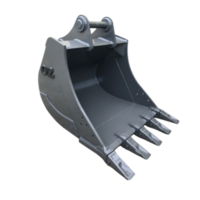
- General-Purpose Buckets (GP Buckets): The ultimate all-rounder for everyday digging and material handling across the job site.
- Trenching Buckets: Narrow buckets built with heavy-duty teeth to slice clean, straight lines for pipes and conduits.
- Mud Buckets: Wide, smooth-edged buckets designed for grading, bulk loading material, and clearing silt from drains.
- Skeleton/Sieve Buckets: Slatted designs built for on-site material separation, keeping the big rocks and debris in the bucket while letting the loose soil or water screen through.
- Tilt Buckets: Feature a hydraulic tilting mechanism that lets you adjust the bucket angle for accurate slope finishing, contouring, and grading.
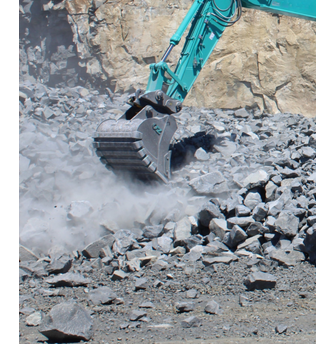
- Rock Buckets: Reinforced with heavy-duty wear strips and tough teeth to bite into hard-packed ground, blast rock, and heavy stone.
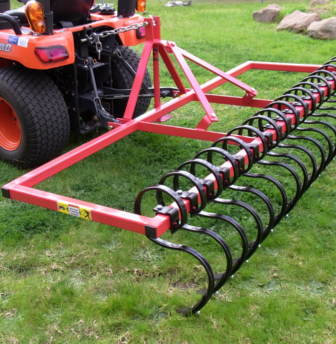
- Rake Buckets: Just like a rake, but in excavator bucket form!
Hydraulic Excavator Attachments
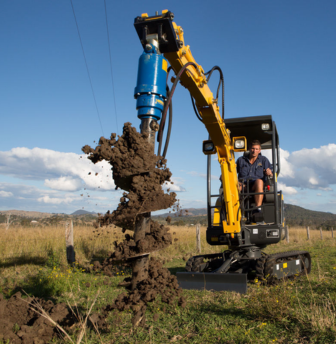
When standard digging isn't enough, you can install specialised hydraulic attachments for excavators directly into the machine's auxiliary lines. If you’re clearing dense scrub, a heavy-duty mulcher attachment turns saplings and brush into fine mulch instantly. For civil and electrical contractors, swapping the bucket for a dedicated digger trencher ensures high speed and consistent depth across long runs.
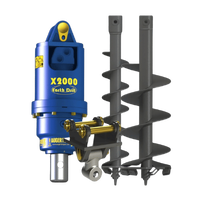
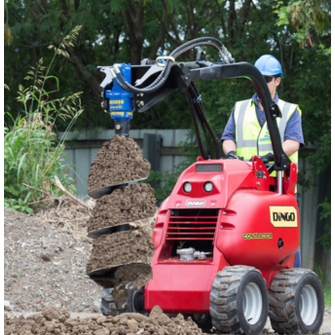
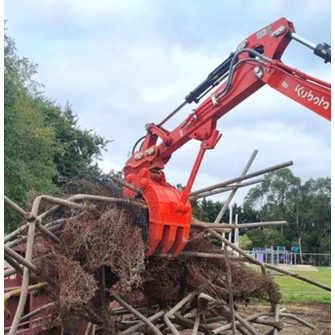
Whether you need rock breakers, log grapples, or auger packages, selecting high-quality excavator attachments improves your machine's utility and site turnaround time.
Excavator vs Skid Steer: Which is Better?
A common question on the job site is whether to deploy an excavator or a skid steer loader. The answer depends on the nature of the task:
- Digging Depth and Reach: Excavators win hands down. They are built for deep excavation, foundation digging, and working over obstacles.
- Bulk Material Moving: A skid steer is optimised for bulk loading and transporting material like gravel or mulch across a site quickly, whereas an excavator is generally restricted to its stationary footprint unless it crawls to a new position.
- Manoeuvrability: While a skid steer is exceptionally agile for loading trucks in tight car parks, an excavator's 360-degree rotation allows it to work in highly confined spaces where a skid steer wouldn't have room to execute a three-point turn.
- Versatility: Skid steers are usually more versatile, suited to a larger variety of tasks, from material handling to land clearing.
How to Choose the Right Excavator
Consider the physical constraints of your job site (space and height clearances), the weight of the material you need to lift, the required digging depth, and the type of soil or terrain you’ll be traversing. Matching the operating weight and hydraulic flow to your preferred attachments is vital. And if you’re ever in doubt, you can reach out to the team at Bunyip for expert advice.
Settle the Spec with Bunyip Equipment
Bunyip Equipment is a proudly Aussie, family-owned business with a long history in the earthmoving industry. We know that your fleet is your livelihood, and we’re here to ensure you get the right advice and the right products from the get-go. Explore our full range of earthmoving machinery and excavator attachments online today, or give our team a buzz to discuss the specs for your next project.
 CART
CART


 Contact Us













 VIEW ALL BRANDS




















 BACK TO BLOG