Skid Steer vs Excavator: Which Should You Choose?
Every tradie or property owner reaches a point where they need to take a hard look at their fleet and decide exactly where to park their hard-earned capital. Choosing between a skid steer vs excavator isn't about finding a one-size-fits-all "winner" — it’s about identifying the specific machine that solves your daily bottlenecks on site. Investing in earthmoving machinery requires a clear head and a solid appraisal of the job at hand, because a mismatched unit just turns your site into an incredibly expensive parking lot. Let’s look at the facts to see which machine deserves a prized spot in your collection.
Which is Better for Digging: Excavator or Skid Steer?
The answer lies in how these machines are engineered to leverage weight and hydraulic pressure.
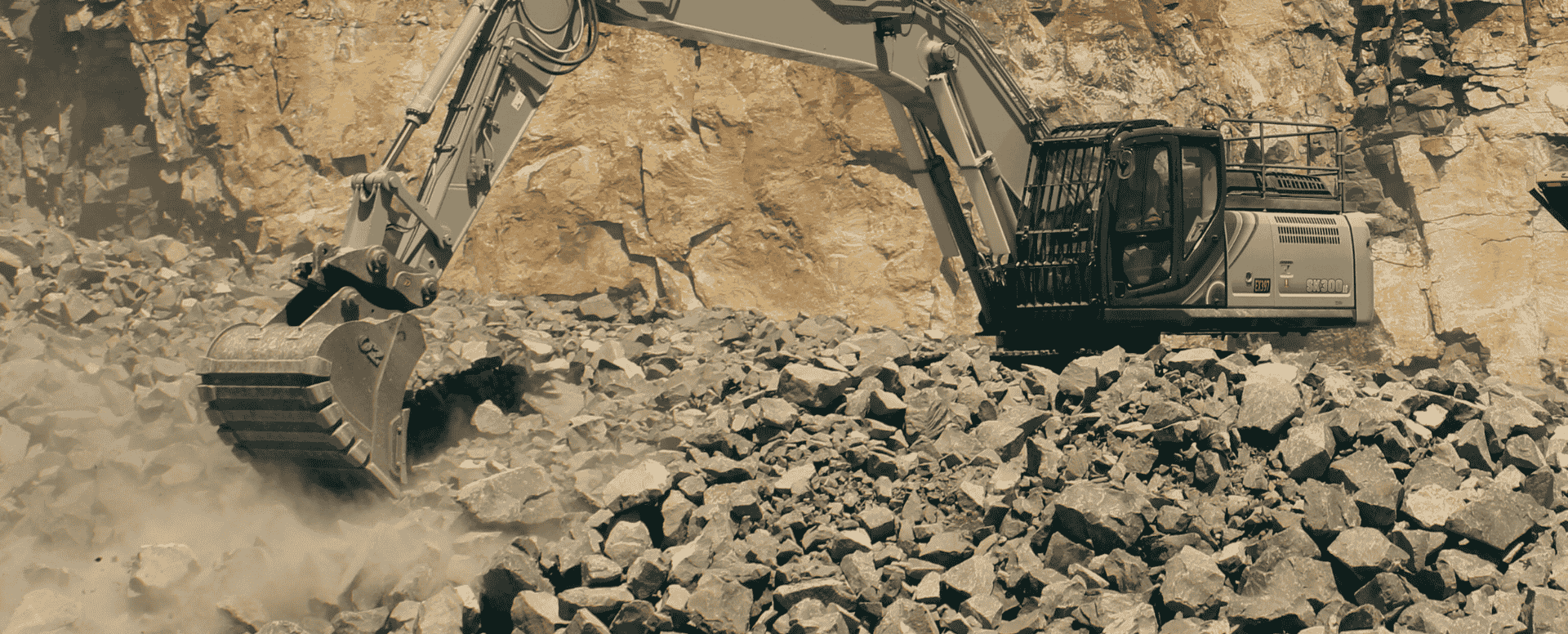
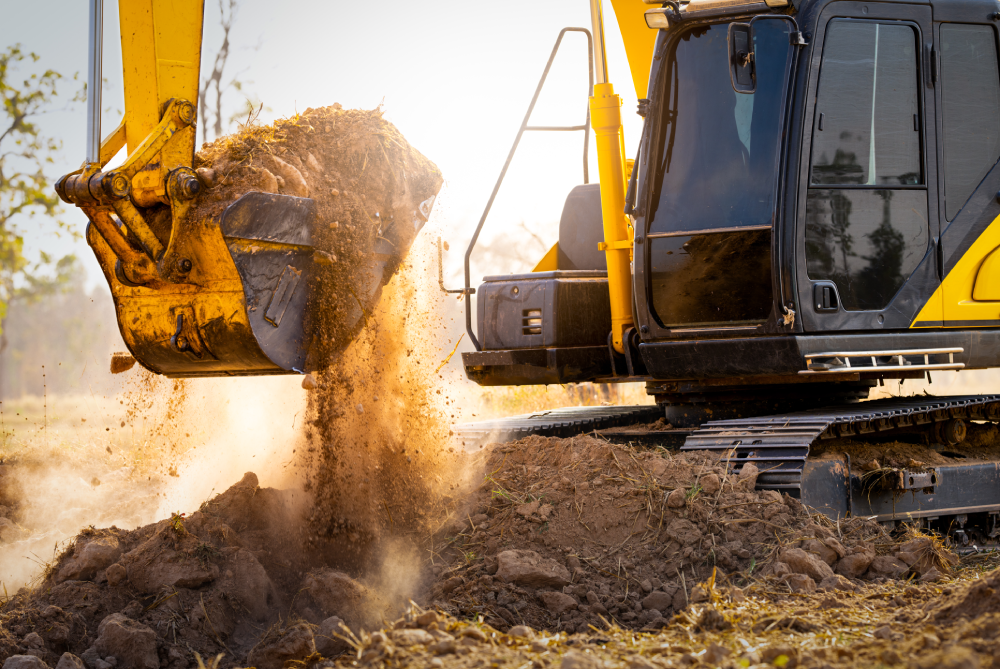
An excavator (also known as a digger) is a dedicated, stationary digging powerhouse. Built with a heavy counterweight, a 360-degree rotating cabin house, and a multi-jointed hydraulic arm, it’s designed to park its tracks or wheels in one position and tear deep into the earth.
A skid steer operates on forward momentum. It pushes into a pile using its drivetrain, relying on the machine's travel speed to pack a bucket. While it can handle shallow scraping, stripping topsoil, and minor levelling tasks, its design means it can't dig straight down or reach below its own wheel line.
Can a Skid Steer Replace an Excavator?
If you’re after something for deep civil earthworks, structural foundations, or deep mainline installations, then the answer is a clear no.
Unlike a skid steer, an excavator can apply direct downward hydraulic force and massive breakout pressure far below its track level. That’s why an excavator is the only viable choice for deep footings, structural foundations, and major drainage works.
Site Travel & Capacity: The Lifting Comparison
While the excavator dominates when working below the surface, the skid steer takes over the moment you need to move material from one boundary line to the next.
A realistic lifting capacity comparison needs to consider stability versus transport speed. An excavator can pick up immense, awkward loads — like a concrete stormwater pipe or a massive log — and use its swinging cab to place it precisely. But try to carry that load two hundred metres down a rough track, and you’ll spend all morning crawling at a snail's pace while putting major wear and tear on your track frames.
A skid steer is built as a compact, low-centre-of-gravity shuttle. It can grab a capacity load of blue metal, topsoil, or road base, hoist it securely within its wheel lines, and shift it across a rough paddock or subdivision at high speed.
Operational Tasks: Landscaping & Utility Runs
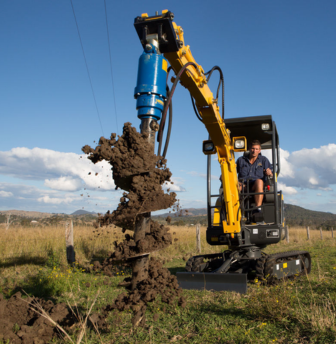
The physical layout of the plot and the phase of the build usually determines which machine is best for landscaping. For the heavy structural phase — carving out steep batters, placing massive rocks for a retaining wall, or sinking deep pier holes — a mini excavator is king because it can work over obstacles and right up against fence lines. For the final finishing phase — spreading topsoil, backing over driveway base, and unloading heavy pallets of turf — the agility of the skid steer loader is unmatched.
A similar operational split happens when you’re tossing up what is better for trenching. If you’re running long, straight electrical conduit or poly pipe runs through clear, open country, a skid steer paired with a high-speed chain trencher will outpace almost anything else on the market. However, if your utility work moves into a congested urban street packed with live existing services, or you hit hard-packed rock, you need an excavator. The elevated visibility from a digger’s cab and the ability to gently tease out hidden pipes with a narrow bucket are super handy.
Hydraulic Versatility & Attachment Compatibility
Getting the most out of your asset means looking closely at your hydraulic auxiliary options and attachment compatibility.
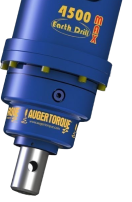
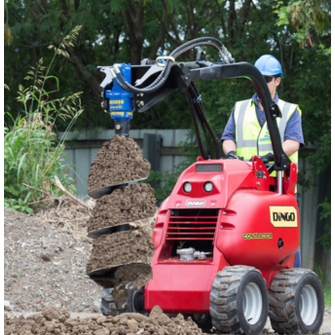
Skid steers are widely regarded as the ultimate multi-tool because of their standard universal quick-hitch plate and high-flow auxiliary hydraulics. This design allows you to plug in a massive variety of high-draw trade gear, turning one loader into a road broom, a concrete mixer, a stump grinder, or a vegetation slasher.
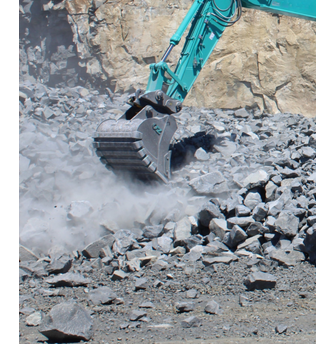
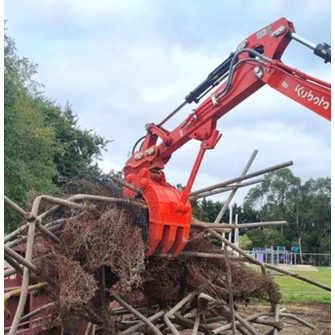
Excavators use a different connection system, relying on specific pin dimensions or dedicated quick-couplers. While you won't be using an excavator to sweep a car park, its hydraulic lines are built to withstand intense shock and pressure for high-impact tools. Swapping your digging bucket for a premium excavator attachment, such as a heavy-duty hydraulic rock breaker, a timber grapple, or a land-clearing mulcher, turns your digger into a multi-purpose, high-production clearing machine that handles the toughest demolition contracts without flinching.
Get the Right Gear with Bunyip
At Bunyip Equipment, we know that your machinery is how you make your living. As an Australian family-owned and operated company, we’ve spent years working alongside contractors and primary producers who need gear that performs under pressure. Getting your hitch dimensions and hydraulic flow rates right isn't something you leave to guesswork — it’s what keeps your crew moving. Whether you need a transparent, formal quote or a bit of technical advice to ensure a certain attachment is a match for your machine, we're here to help you get it right. Explore our full selection of earthmoving parts and accessories online today, or contact our team directly to get started.
 CART
CART


 Contact Us











 VIEW ALL BRANDS


















 BACK TO BLOG