When you’re staring down a big project, your machinery is only as productive as the gear you’ve got hitched to the front of it. Whether you’re a contractor prepping a new subdivision or a farmer clearing a back paddock, the choice between a skid steer and a wheel loader can be tricky. While both machines earn their place in earthmoving, they operate on completely different logic when it comes to weight, movement, and hydraulic capacity. Getting the machine-to-attachment pairing right doesn’t just make the task easier; it helps protect your investment and ensures your gear stands up to the flogging of a long day on the tools. Let’s break down the technical differences between wheel loader attachments and skid steer attachments so you can get the right kit for your site.
Comparing the Main Benefits
The biggest divide between these two powerhouses is how they handle the ground and the load.
Manoeuvrability
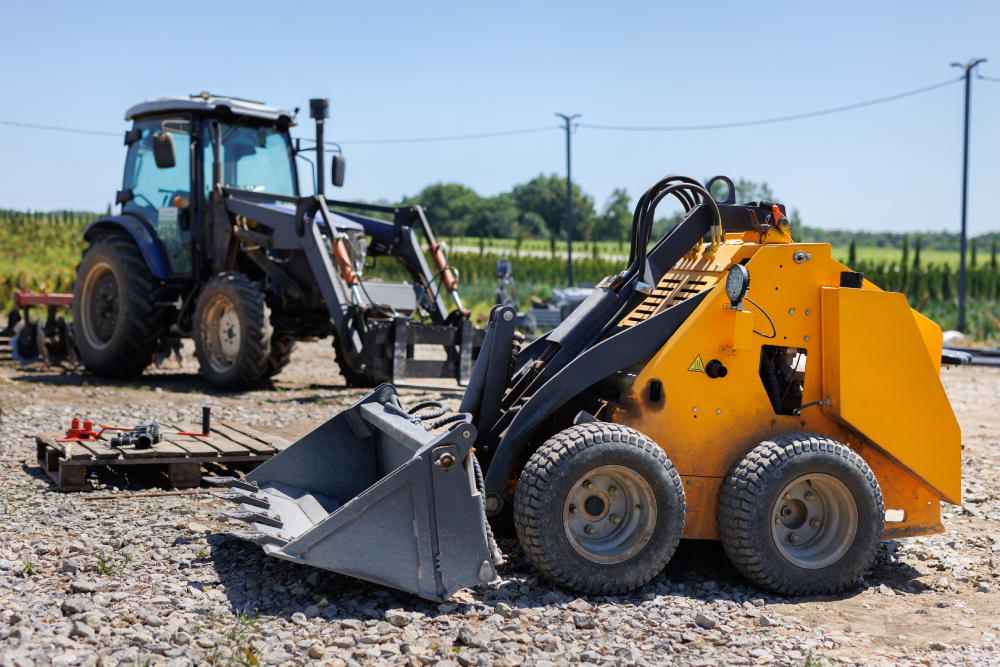
A skid steer loader is the king of tight spots. With its unique rigid frame and zero-turn radius, it can pivot within its footprint, making skid steer attachments ideal for residential landscaping, internal demolition, or tight farm space. However, because they "skid" to turn, they can be tough on tyres and surfaces like finished turf. On the other side of the yard, a compact wheel loader uses articulated steering, being hinged in the middle. It needs more room to move, but is far kinder to the ground surface.
Power & Visibility
If the job is about shifting bulk tonnage, the wheel loader and its attachments take the trophy. With higher horsepower and superior lifting capacity, these machines can move massive volumes of gravel or dirt quickly. They also offer a higher seat and clearer visibility of the bucket or forks, making high-cycle loading into tippers easier. Skid steers are less powerful in terms of raw lift but offer the precision needed for detailed grading and digging in congested areas.
Speed & Versatility
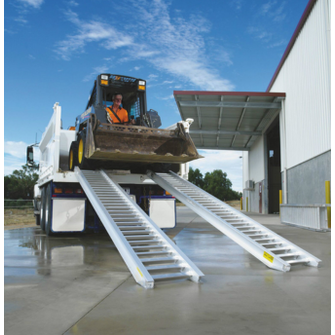
Wheel loaders are built for speed over distance. If you’re transporting material across a large site, a loader will do it faster and more smoothly. However, skid steers are like the Swiss Army Knife of the industry. Because they’re easy to transport on a standard trailer and feature a universal quick-hitch, they can be attached to a huge range of attachments, from trenchers to brush cutters and augers.
We supply gear exclusively from industry leaders like Norm Engineering and Himac to ensure your attachments stand up to the task every time.
Attachment Specs: Getting the Hitch and Hydraulics Right
Before you invest in new gear, you need to look at the business end. Most modern skid steers use a universal quick-hitch, which makes swapping between tools a breeze. Wheel loaders, however, often use larger pin-on systems or specific ISO couplers, meaning the gear isn't always interchangeable.
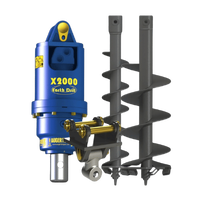
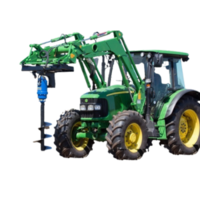
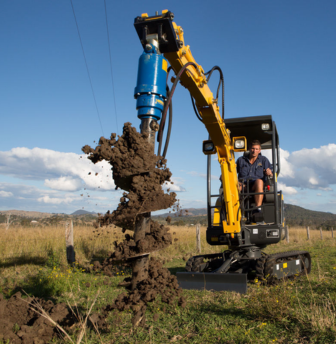
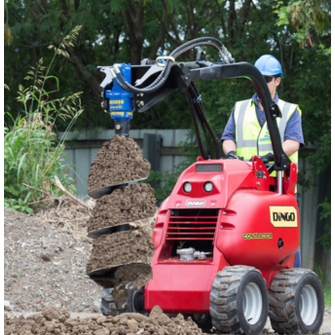
- Auger Packages: An auger is a game-changer for fencing and plantations. On a skid steer, you get surgical precision for post holes. On a loader, you benefit from the extra reach and down-pressure. Check out our auger packages for heavy-duty earth drilling.
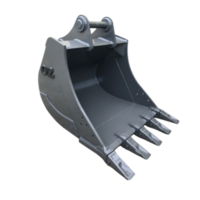
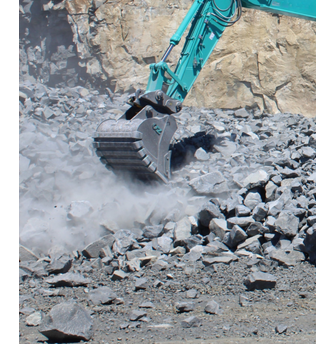
- Buckets: These are the bread and butter of any machine, but their applications vary. A high-capacity bucket on a wheel loader is designed for pure volume and bulk earthmoving. On the flip side, a multipurpose bucket on a skid steer offers added versatility, combining functions such as grading, blading, and grabbing with a single attachment.
- Trenchers: If you’re laying pipe or cable, trenchers turn a skid steer into a dedicated utility machine. Because skid steers can creep at low speeds while maintaining high hydraulic flow, they are the preferred choice for consistent trenching depth.
- Forks: Whether it’s moving lumber or palletised stone, forks are essential. Pallet forks on a wheel loader are generally more stable for heavy lifting, while skid steer forks are better for navigating narrow warehouse doors or cluttered sites
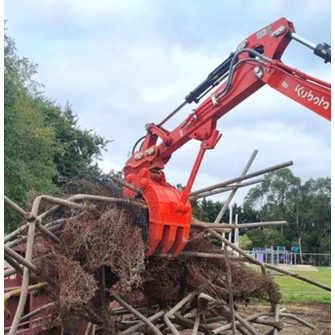
- Grapples: If you’re tackling forestry, land clearing, or demolition, grapples are non-negotiable. A skid steer with a grapple is perfect for debris removal in tight quarters, while a larger loader grapple is the preferred choice for moving large logs or heavy scrap metal.
Keen to dig deeper? Take a squiz at our skid steer attachment guide or go ahead and browse our skid steer and wheel loader attachments.
Applications: Where Each Machine Shines
Selecting the right machine-attachment combo depends on where you’re working. For example:
- Tight Urban Sites: A skid steer paired with a 4-in-1 bucket or trenchers is a winner for urban areas, smaller residential projects, and construction sites where space is at a premium.
- Farm & Agriculture: For boring holes through tough clay for a new fence line, a skid steer with an auger saves days of manual labour.
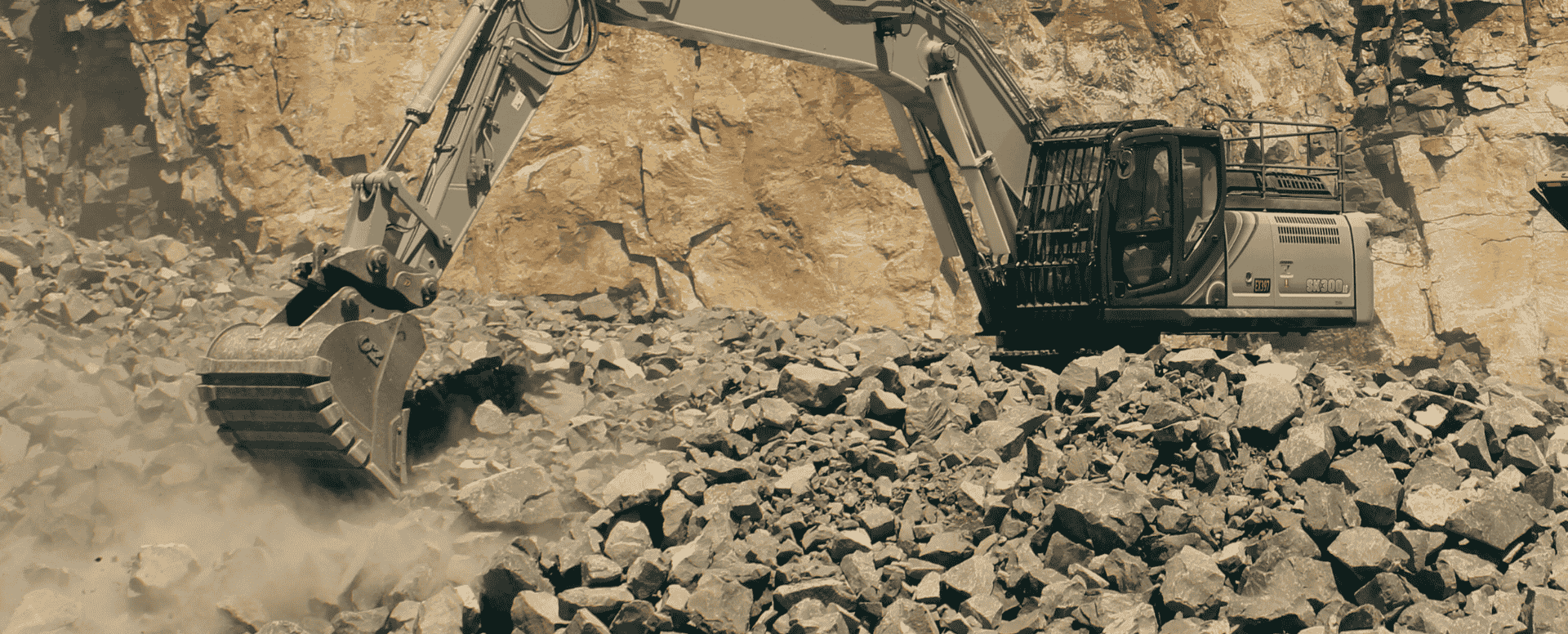
- Quarries & Civil Construction: This is where wheel loader attachments (like buckets and forks) take over. If you're shifting bulk gravel, sand, or debris into high-sided trucks, the wheel loader’s reach and speed win every time.
- Road Maintenance & Contractor Sites: A compact wheel loader is useful for quick loading tasks.
Frequently Asked Questions About Wheel Loader and Skid Steer Attachments
What is the main difference between a wheel loader and a skid steer?
It’s all in the frame and steering. A skid steer is a rigid, compact machine that pivots in place (zero-turn). A wheel loader is typically larger, articulated (hinged) in the middle, and built for higher speeds and heavier bulk lifting.
Which machine offers better versatility for attachments?
The Skid Steer Loader is generally the versatility winner. It can carry everything from concrete mixers to mulchers and brush cutters, turning one machine into a total site solution.
Which machine is better for working in tight or confined spaces?
The skid steer wins hands down. Its ability to rotate 360 degrees within its own footprint allows it to work in areas where a wheel loader simply couldn't turn around.
Are wheel loader and skid steer attachments interchangeable?
Usually, no. They use different coupling systems and have different hydraulic flow requirements. Always check your machine's mounting plate and compact wheel loader specs before purchasing.
Picking the Right Gear For the Job
Choosing between a skid steer and a wheel loader isn't about which machine is "better"—it's about which one fits the project in front of you. If you need a nimble multi-tool for precision and tight access, stick with a skid steer. If you’re after high-volume production and operator comfort on big sites, the wheel loader is your best bet.
At Bunyip Equipment, we’re a family-owned Aussie business with years of industry history. We’re here to help you navigate the specs and ensure you get gear that actually works. Explore our range of skid steer attachments and wheel loader attachments online, or give us a buzz if you need a hand deciding. We’ll get you sorted.
 CART
CART


 Contact Us











 VIEW ALL BRANDS



















 BACK TO BLOG